
Rare & Elusive Creatures of Emerald Arch!
With extensive research taking place on Emerald Arch’s reserve, we have been able to find and photograph some of the most unique animals of the Cuyabeno region of Ecuador. Emerald Arch is based in the Northeast corner of the country, close to the border of Peru and Colombia. Even though the area is highly used for tourism, because of the Cuyabeno reserve, the scientific research taking place in this zone is very low.
Harry Turner & Nick Volpe working with community members in search of rare fish species
With teams of scientists exploring our very small patch of land (184 acres) we have found some incredible species, some of which are very new to science and others which have only been found only a handful of times ever in Ecuador. The expeditions have mainly been surveying reptiles, amphibians, fish and insects, however, with the help of our browning trail cams, we have also been able to survey the area for elusive mammals and marsupials too.
April 2026 will mark one year of managing the land, and in that time the amount of fascinating and beautiful species we have found have truly blown our expectations out of the park. With oil companies continuing to cause damage in the area as well as local farms, we knew that when buying this land the wildlife populations may not be as healthy as old growth forests deep in the middle of nowhere, but what we have found has shocked us. It seems that this small area we are protecting is the home to an abundance of healthy and flourishing fauna and flora.
We want to highlight three species that we have found over the past year and tell our supporters a little bit more about the species itself, the threats these species are facing and what you, as readers, can do to continue to support them.
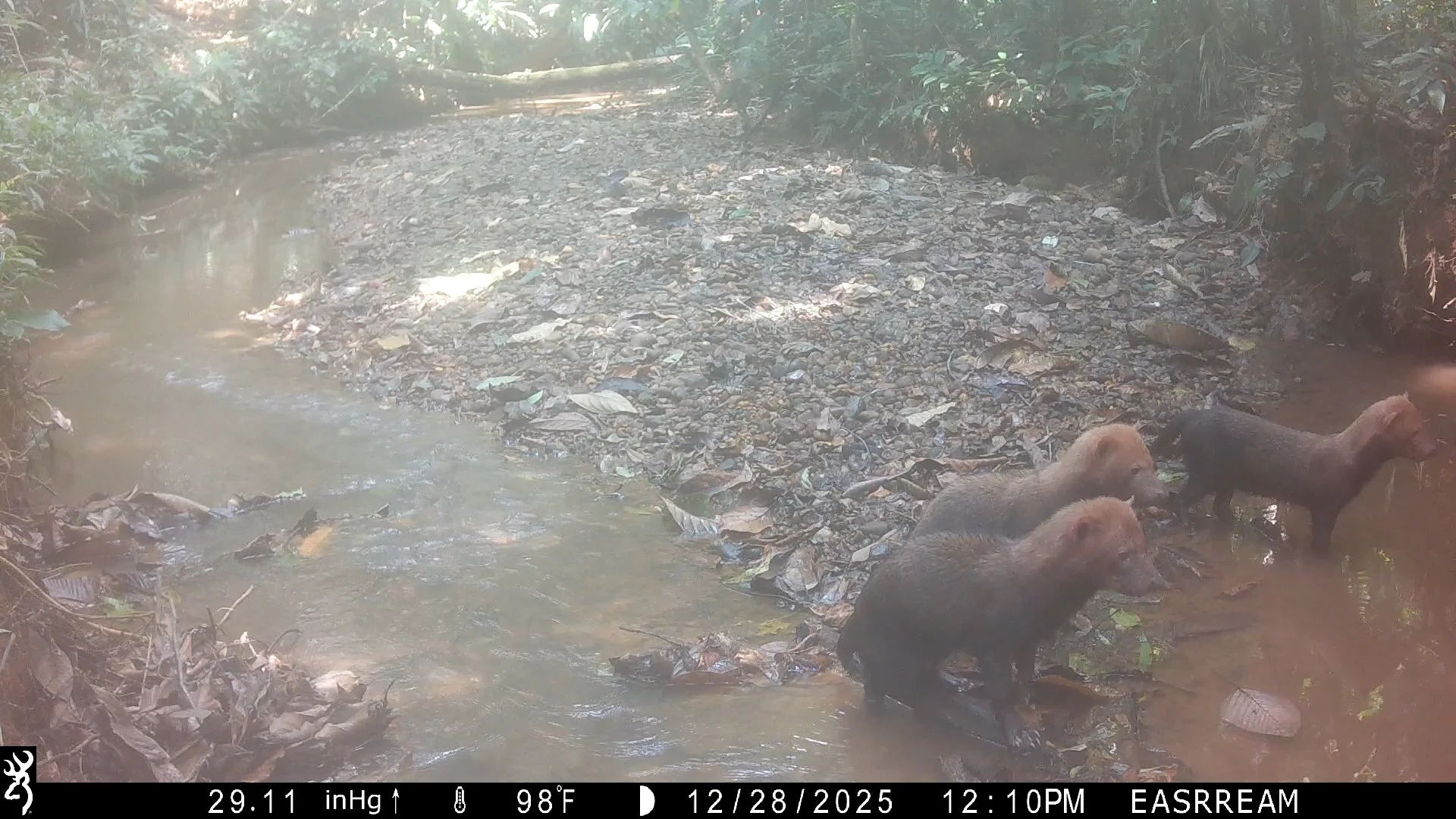
Bush dogs in the stream of Emerald Arch - 2025
Speothos venaticus - The bush dog is a near threatened species due to habitat loss, hunting of its prey and also diseases contracted via domesticated dogs. Even though they have a large distribution area, they are extremely rare and it’s believed that there has been a 20-25% decrease in their population over 12 years.
For Emerald Arch to have a family of 7 individuals on the land, it’s extremely important for us to keep domesticated dogs off of the property, ensure that no hunting takes place on the land and to also continue working on reforesting the developed areas, to help with the safety and protection of this species.
To support the bush dogs, we are looking for donations to put towards monitoring of camera traps and reforestation projects. As little as $10 a month can help towards the protection of these beautiful dogs on our property.
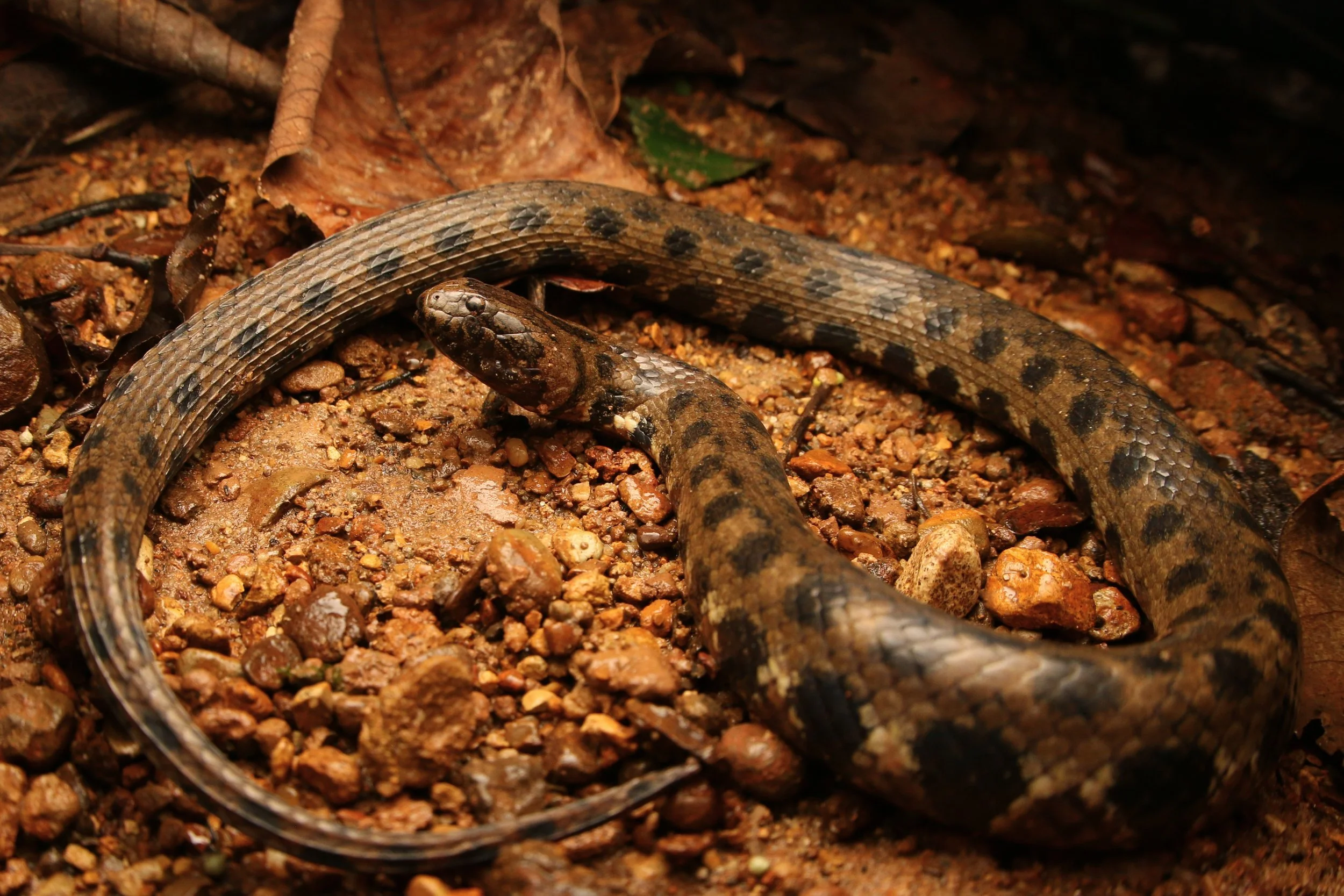
Helicops Hagmanni in the stream of Emerald Arch - 2026
Helicops Hagmanni - The arrowhead water snake is an aquatic species that is active during the night, hunting in streams and swamps exclusively for fish. Even though this species is listed as LC; least concern on the IUCN red list, only six have been found in Ecuador. The last individual was in January of 2026 on Emerald Arch’s land.
Water pollution as well as habitat loss are the biggest threats to this species.
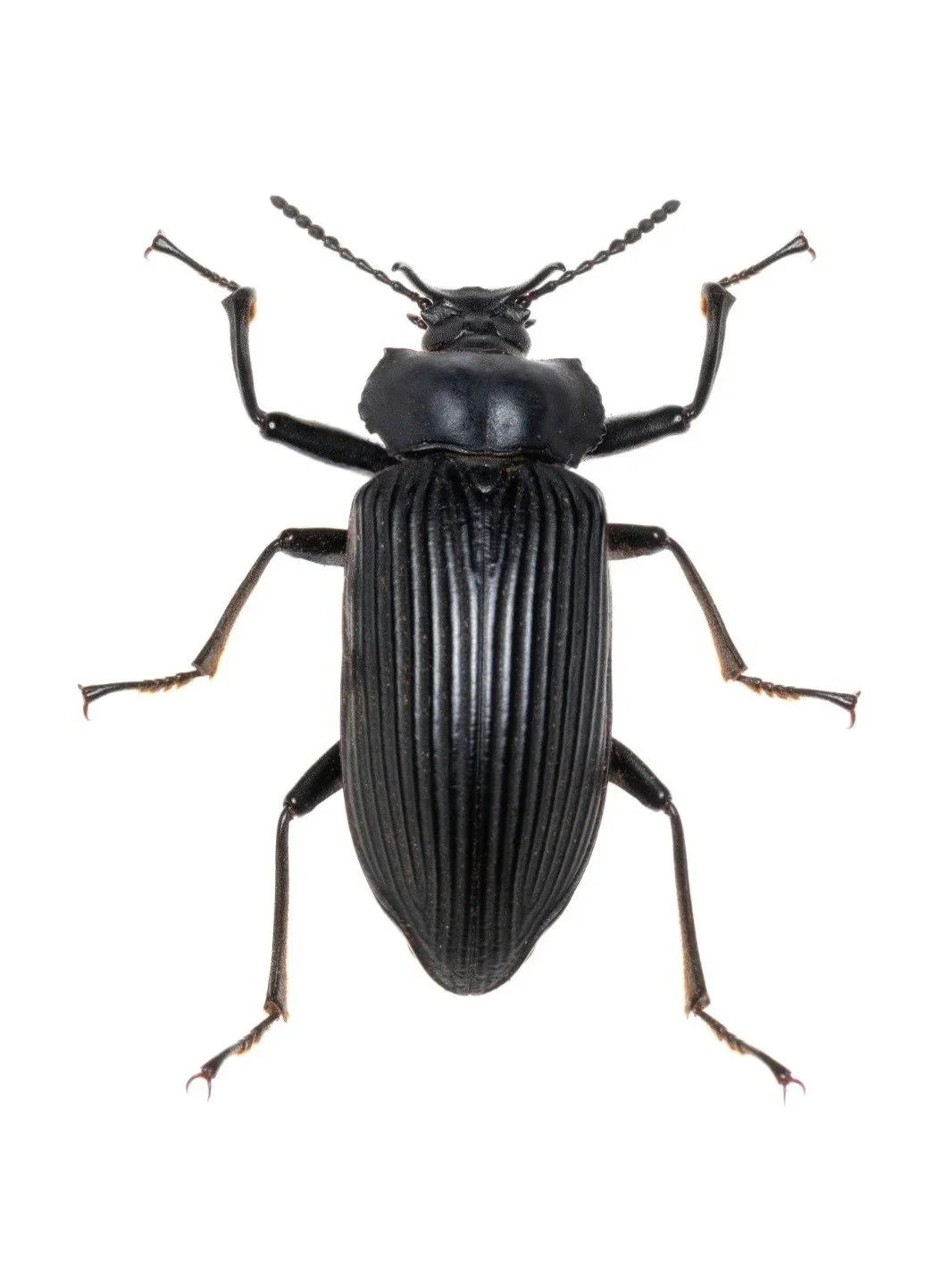
Tauroceras tichyi - This darkling beetle was formally described as a species in 2005 from an individual specimen that was collected in 1996 from a region of Ecuador called Tena. Since then, no other individuals had been found, until, 29 years later, a live male was found and photographed on Emerald Arch in August of 2025. Very little is known about this ultra rare species, not the food it eats, nor the habitat it occupies, so this is a fantastic find, not just for us at Emerald Arch, but for science in general. It is believed that this is an endemic species to the Ecuadorian Amazon.
Our finding is the second record of this species, confirming the existence of a population in the Cuyabeno area of Sucumbios province.
From what we know about other beetles, we can be certain that habitat loss is the biggest threat to this already rare and elusive species.
A huge thanks to Gil Wizen for the ID and information.
Additional thank you’s go out to Nick Volpe, Lucyna Kania, Roger Walker, Lexie Gray, Gilver Careno, Angel Flores & Browning trail cams
